Spot Coverage: Assigning Pimple Patches a Limited Role in Tretinoin Care
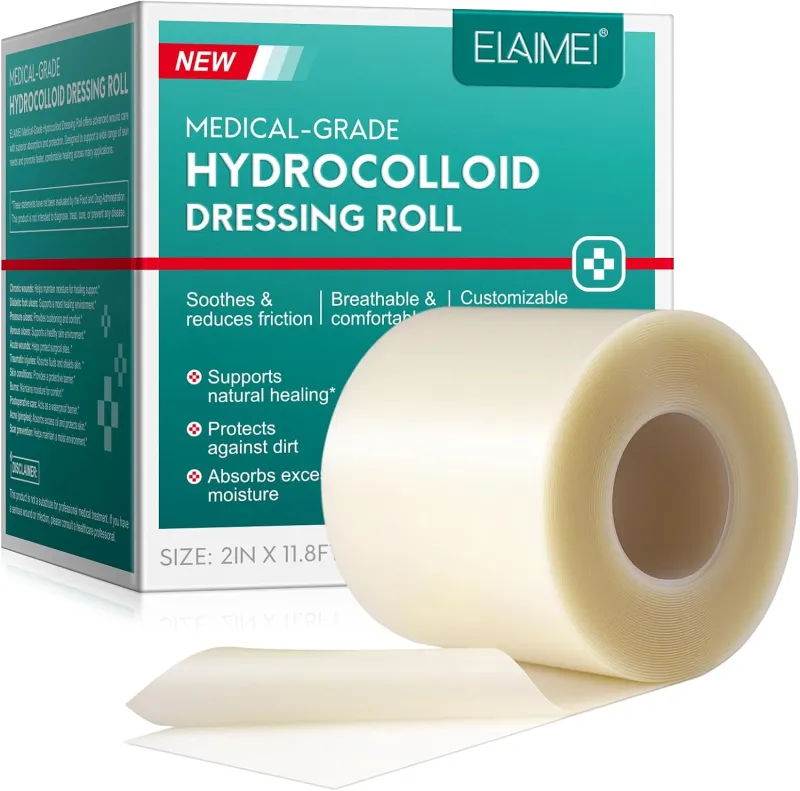
Photo: hydrocolloid pimple patch on face close-up skincare, via m.media-amazon.com
Pimple patches have become a standard item in the American drugstore aisle, and their appeal is understandable: they are inexpensive, discreet, and easy to apply. For patients using prescription tretinoin, however, the patch raises a specific question that marketing copy rarely addresses. Tretinoin already asks the skin to tolerate a controlled irritant, and a patch creates a sealed microenvironment over a single lesion. The combination is not automatically unsafe, but it is not casual either. The useful approach is to give patches a narrow, deliberate role rather than treating them as a second acne treatment layered onto the first.
First, Distinguish the Patch
Not all pimple patches work the same way, and the differences matter for anyone using tretinoin.
- Hydrocolloid patches are the simplest form. They absorb small amounts of fluid and protect a lesion from picking, friction, and cosmetic products. Many contain no active drug. For most tretinoin users, these are the lowest-risk option when used correctly.
- Active-ingredient patches add salicylic acid, niacinamide, tea tree oil, benzoyl peroxide, or similar agents. These can be useful for some patients, but they introduce a second irritant or sensitizer. The risk rises when the skin is already peeling or stinging from tretinoin.
- Microdart patches physically breach the stratum corneum and deliver ingredients into the upper skin. They are not a casual add-on to prescription retinoid therapy. A patient using tretinoin should discuss microdart products with a dermatologist before combining them.
The Occlusion Problem
The central concern is occlusion. Tretinoin increases cell turnover and can compromise the skin barrier, especially during the first twelve weeks of use. Covering treated skin with an adhesive patch traps moisture and heat and can increase the local penetration of whatever is underneath. That is why a patch applied directly over tretinoin is a poor idea. It can amplify irritation, produce a rim of redness around the patch, or create a raw, weepy spot that takes longer to settle than the original blemish.
The practical rule is straightforward: do not apply tretinoin to an area that will be covered by a patch, and do not apply a patch over skin that still has wet tretinoin on it. The two products should be separated by time or by location.
A Workable Sequence
For a patient using tretinoin at night, the safest sequencing is usually daytime patch use and nighttime tretinoin, with the patch removed before the evening routine. A hydrocolloid patch can be applied in the morning to a clean, dry lesion and removed before cleansing in the evening. This protects the spot during the day without sealing tretinoin underneath it at night.
On tretinoin-free evenings, a patch may be left on overnight if the surrounding skin is calm. Active-ingredient patches are better reserved for those off nights, and they should be skipped entirely when the skin is visibly irritated, peeling, or recently treated with waxing, laser, or a facial. If a patient wants to use a patch and tretinoin on the same evening, the patch should be placed on a lesion that is outside the tretinoin application area, and the tretinoin should be allowed to dry fully before any adjacent product is applied. Even then, the combination is best used sparingly rather than as a nightly habit.
When to Skip the Patch
A patch is not appropriate for every blemish. Skip it when the lesion is deep, nodular, or cystic; when there is spreading redness, warmth, or pain; when the skin is broken or weeping; or when the patient has a known adhesive allergy. Patches should not be used to delay care for a lesion that is enlarging or that sits in a high-risk area such as the nasal crease or the angle of the mouth. In those cases, a dermatologist should evaluate the lesion rather than a drugstore product.
Reading the Result
A patch is helping when the lesion flattens, drains less, and loses its surrounding redness without new irritation. It is time to remove the patch when it turns white and the spot is calmer, or after the manufacturer's recommended wear time. A patch is not helping when the patient needs to reapply it repeatedly, when the lesion becomes more painful, or when new satellite bumps appear around the original spot. Those patterns suggest that the patch is masking a deeper inflammatory process rather than resolving it. A lesion that persists beyond two weeks, or any lesion that worsens despite careful patch use, deserves medical attention.
A Limited but Useful Role
Pimple patches are best understood as spot coverage, not as acne therapy. They can protect a single lesion from picking, reduce friction during the day, and make a blemish less noticeable. They do not replace tretinoin, and they should not become a reason to add more actives to an already irritated routine. For most tretinoin users, the durable strategy is to keep the evening routine simple, reserve patches for occasional daytime use, and review frequent breakouts with a dermatologist rather than escalating patch use. Used with that restraint, patches can coexist with tretinoin without turning a small blemish into a barrier problem.