The Holiday Table Is Not a Diagnosis: A Tretinoin User’s Guide to Festive Eating and Breakouts

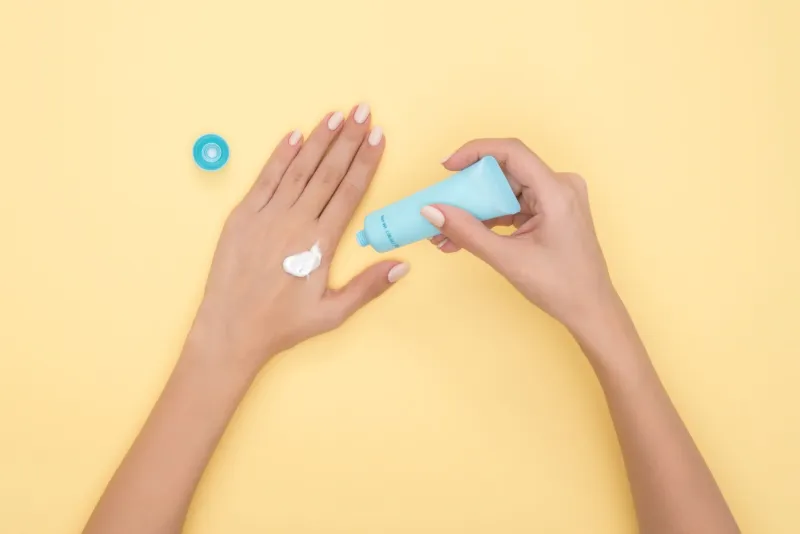
Photo: festive holiday dinner table with pie and facial skincare products flat lay, via i.ytimg.com
As the 2026 holiday season gets underway, many tretinoin users will face the same familiar sequence: a week of office potlucks, Thanksgiving leftovers, family dinners, and late-night celebrations, followed by a new blemish and an immediate internal audit of every dessert eaten. Sugar and dairy become the first suspects. Sometimes that suspicion is reasonable. Often, it is a convenient story imposed on a complex process.
For someone already using tretinoin, the more useful question is not “Did one slice of pie cause this?” but “What is most likely to matter for my skin over the next several weeks, and what should I avoid changing in response?” A single breakout after a holiday meal is rarely a diagnosis. It is a data point that needs context.
The Dessert Plate Is an Easy Suspect
Holiday acne myths tend to follow a simple pattern: a visible breakout appears after a season associated with rich food, and the food gets blamed. The reasoning feels intuitive, but it ignores several concurrent changes. Travel disrupts sleep. Party schedules compress evening routines. Stress rises. Alcohol and salty foods may affect hydration and puffiness. Makeup may be worn longer. Tretinoin may be skipped for a night or applied inconsistently. Any of these can influence how skin looks without implicating a specific ingredient.
This does not mean diet is irrelevant. It means a festive meal is not a controlled experiment. If a patient breaks out after a holiday weekend, the most honest conclusion is usually that several factors converged, not that sugar alone caused the lesion.
What the Evidence Suggests About High-Glycemic Eating
The research on high-glycemic diets and acne is more nuanced than internet summaries suggest. Several studies, including small randomized trials, have found that lower-glycemic eating patterns may be associated with modest improvements in acne severity for some people. The proposed mechanisms involve insulin, insulin-like growth factor 1, and sebum production. That is a plausible pathway, not a universal rule.
What the evidence does not support is the idea that every person with acne must eliminate sugar or follow a restrictive holiday plan. The effect size is generally modest, the studies are not uniform, and diet is only one contributor among many. For a tretinoin user, the medication remains the anchor of treatment. Diet may be a supporting variable, particularly for someone who has already noticed a consistent pattern.
A practical stance is to enjoy holiday foods without treating them as moral failures, while watching for repeated associations over weeks rather than reacting to a single meal. If a person suspects that high-glycemic eating reliably worsens their acne, that is a conversation to have with a dermatologist or registered dietitian — not a reason to begin a chaotic elimination diet during the busiest month of the year.
Dairy: A More Complicated Conversation
Dairy is the other frequent holiday scapegoat. Observational studies have reported associations between milk intake, especially skim milk, and acne in some populations. The findings are not consistent across all studies, and the evidence is not strong enough to justify telling every acne patient to avoid all dairy. Yogurt and cheese have less clear associations than milk, and dairy provides important nutrients.
For tretinoin users, the reasonable approach is pattern recognition rather than blanket avoidance. If breakouts consistently cluster after significant dairy intake — not just during a holiday week when sleep and routine also change — a time-limited trial could be discussed with a clinician. A structured trial is different from randomly cutting out food groups. It should have a defined duration, a way to judge change, and a plan for reintroduction or continuation.
Stress, Sleep, and the Holiday Calendar
Stress is not a cosmetic excuse. Psychological stress can influence inflammatory pathways and may worsen acne in some people. Holiday travel, family obligations, end-of-year deadlines, and disrupted sleep can create a physiological environment that is less forgiving to skin. Poor sleep and elevated stress may also make people more likely to pick at lesions, skip moisturizer, or over-apply tretinoin in an attempt to fix the problem quickly.
That last response is worth naming directly. A holiday breakout is not a signal to punish the skin with more tretinoin, stronger acids, or aggressive scrubs. Irritation can mimic or worsen acne, and a compromised skin barrier can make the next several weeks more difficult. Consistency is more valuable than intensity.
Where Tretinoin Fits in a Festive Week
A working tretinoin routine should not be abandoned because of a single breakout. If the routine has been tolerated, the priority is to maintain a reasonable frequency, keep moisturizer in place, and use sunscreen during daytime travel and outdoor activities. If skin becomes irritated from weather, travel, or stress, buffering or temporarily reducing frequency may be more appropriate than stopping altogether.
It is also wise not to introduce new active ingredients during a holiday week. Adding a new acid, benzoyl peroxide product, or trendy serum in the middle of festive obligations makes it harder to identify what is helping and what is irritating. Simplicity is an underrated seasonal strategy.
A Practical Holiday Framework
First, enjoy meals without assigning blame to every dessert. Second, keep the baseline routine boring and consistent. Third, judge dietary patterns over weeks, not hours. Fourth, avoid starting a restrictive elimination plan during peak holiday stress. Fifth, if breakouts are severe, painful, or leaving marks, seek dermatologic care rather than adjusting tretinoin alone.
At TretinoinB, the editorial position is straightforward: tretinoin users should worry less about one holiday cookie and more about whether their treatment plan is consistent, tolerable, and reviewed with a clinician when needed. Sugar and dairy may matter for some people. They are not the whole story, and they are rarely the only variable worth examining.