The Unfinished Tube: A Stability and Disposal Protocol for Tretinoin

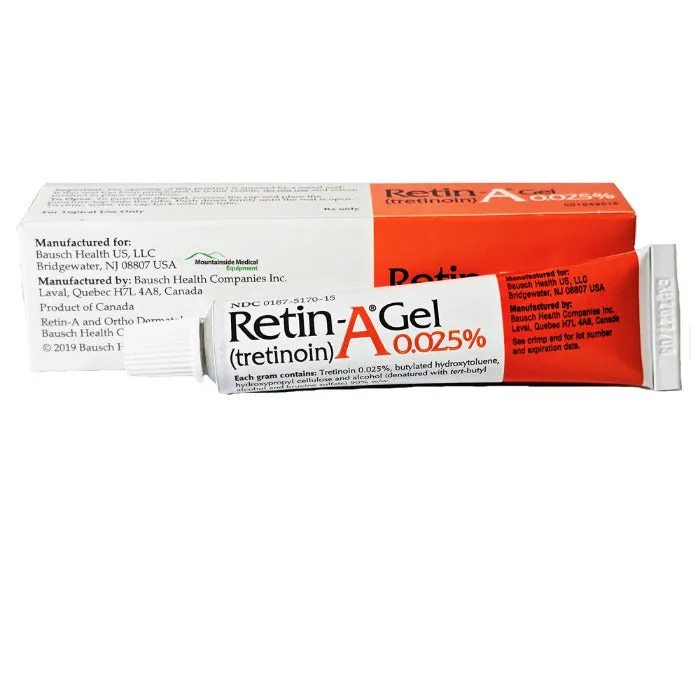
Photo: tretinoin tube skincare product medicine cabinet disposal, via images.fineartamerica.com
A tube of tretinoin rarely disappears exactly on schedule. A prescription may be paused for irritation, a formulation may be switched, or a refill may arrive before the previous tube is empty. The result is a drawer of partial tubes and a reasonable question: what should happen to the product that remains? The answer depends less on sentiment than on three variables: the printed expiration date, the conditions of storage, and the date the tube was first opened. This guide sets out a practical protocol for US patients who want to handle unfinished tretinoin with the same care they apply to application.
Expiration Is a Manufacture Date, Not a Finish Line
The date stamped on a tretinoin carton or crimp is established by the manufacturer for an unopened product stored under labeled conditions. It is not a guarantee that the formulation remains unchanged after the tube has been opened, squeezed, capped, and stored in a bathroom cabinet. Tretinoin is sensitive to light and oxygen, and its vehicle can change over time. The printed date is therefore a useful outer boundary, not a promise of performance after opening.
For commercial tretinoin tubes, there is generally no official beyond-use date once the product is opened. A reasonable approach is to treat the manufacturer's expiration date as the hard limit and to finish the tube well before that date whenever possible. If a dermatologist or pharmacist has provided specific instructions for your prescription, those instructions take precedence.
Record the Open Date Before the Tube Enters Rotation
The simplest way to avoid guesswork is to write the date of first use directly on the tube or its carton with a permanent marker. Add the lot number if it is legible, and keep a note in a phone or in a small log. This record does not need to be elaborate. A strip of masking tape on the tube and a two-line entry in a notes app are sufficient.
A practical habit is to inspect the tube at the same time each month, perhaps when you check your supply before a refill. Look at the crimp, the cap threads, and the body of the tube. If the product has changed in appearance or odor, the record helps you determine whether the change is recent or long-standing. If you cannot recall when a tube was opened, treat it as older than it likely is and evaluate it conservatively.
Signs That a Formulation Has Turned
Tretinoin products can degrade in ways that are visible, olfactory, or tactile. Any of the following findings is a reason to retire the tube rather than apply it:
- A color shift toward yellow, brown, or pink, especially if the change is uneven.
- An odor that is rancid, chemical, or simply different from the product's usual scent.
- A texture that has become gritty, watery, separated, or curdled.
- Crystals or crusting around the cap or opening.
- Visible mold, specks, or other contamination.
Do not attempt to dilute, reconstitute, or salvage a product that shows these signs. A degraded formulation may be less effective and may increase the risk of irritation. The cost of a replacement tube is easier to manage than an avoidable skin reaction.
Keep, Replace, or Retire: A Decision Framework
Three outcomes are reasonable, and the choice depends on the product's status and your clinical need.
Keep the tube when it is within its expiration date, was opened recently, has been stored correctly, shows no signs of change, and remains part of an active prescription. Store it below 77 degrees Fahrenheit, away from direct sun, and away from the humid environment of a shower shelf. Keep the cap tightly closed.
Replace the tube when it is expired or degraded but tretinoin is still part of your regimen. Contact the prescriber or pharmacy rather than stretching the remaining product. Do not use an expired tube as a bridge while waiting for a refill; the uncertainty is not worth the delay in effective treatment.
Retire the tube when it is expired and no longer needed, when the formulation has been discontinued, when degradation is evident, or when you have switched to a different product. If a discontinued formulation was working well, ask the prescriber about a substitute rather than assuming that an old tube remains suitable. A tube that has been sitting unused for years is not a reserve supply; it is an unknown.
Disposal in the United States: What Is Appropriate
Prescription medicines should not be placed in a bathroom trash can without preparation, and they should not be flushed unless the label specifically instructs it. In the United States, the preferred option is a drug take-back program. The Drug Enforcement Administration sponsors periodic National Prescription Drug Take Back Days and maintains permanent collection sites, often at pharmacies and police stations. Some pharmacies also sell or provide mail-back envelopes.
If a take-back option is not available, the Food and Drug Administration provides guidance for disposing of most non-controlled medicines in household trash. For a tretinoin tube, remove the tube from its carton, mix the product with an unpalatable substance such as used coffee grounds or cat litter, place the mixture in a sealed bag, and put the sealed bag in the household trash. Scratch out or remove personal information from the packaging before discarding it. Check local rules, because some municipalities have additional requirements.
The Prescription Boundary: Do Not Share
Tretinoin is a prescription product, and a prescription is written for one person after an evaluation of that person's skin, history, and concurrent treatments. Sharing a tube with a family member or friend is not a favor. It can cause irritation, contact dermatitis, or unintended sun sensitivity, and it may violate state and federal rules governing prescription medicines. Do not donate opened tubes to clinics, charities, or informal exchange groups unless the recipient has a formal program that explicitly accepts them; most do not accept opened prescription products.
A Short Checklist for the Medicine Cabinet
- Write the date of first use on the tube or carton, along with the lot number if available.
- Note the printed expiration date in the same place or in a phone note.
- Store the tube below 77 degrees Fahrenheit, away from humidity and direct light.
- Inspect the product monthly for color, odor, and texture changes.
- Retire the tube at the expiration date, after a reasonable open period, or at the first sign of degradation.
- Use a take-back program when possible; otherwise follow FDA household trash guidance and local rules.
- Never share prescription tretinoin with another person.
An unfinished tube is not a failure of routine. It is a normal byproduct of treatment that changes with seasons, tolerability, and formulation. A dated record and a simple inspection habit turn uncertainty into a clear decision, and a responsible disposal step keeps the product from becoming a household hazard.